High strength threaded rods are widely used in structural engineering, heavy equipment, and industrial systems. Compared with standard steel threaded rods, high strength rods offer higher tensile strength and yield strength, making them suitable for demanding mechanical loads and harsh operating conditions.
This guide explains threaded rod grades, materials, finishes, threading options, and selection criteria for industrial and construction applications.
A threaded rod is a long cylindrical rod with external threads, designed to be used with nuts and washers for fastening and anchoring. High strength threaded rods are manufactured from alloy steel, carbon steel, or stainless steel and heat treated to achieve enhanced mechanical performance.
They are commonly supplied as fully threaded rods or cut to length rods based on project requirements.
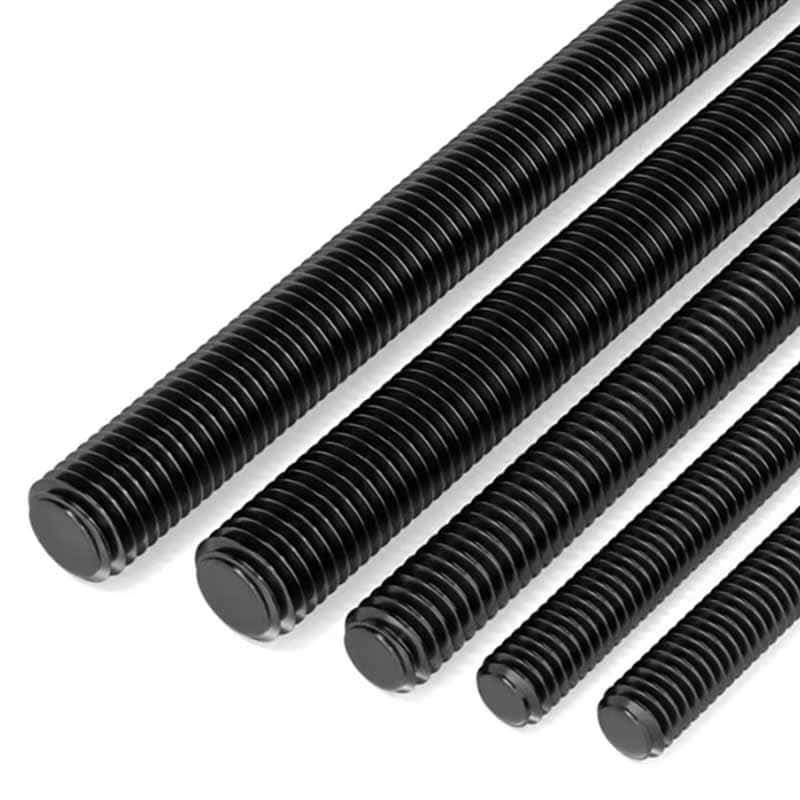
Tensile strength defines the maximum load a threaded rod can withstand before failure. High strength threaded rods are designed to support heavy loads in structural and industrial applications.
Yield strength represents the stress level at which permanent deformation begins. High yield strength is required for anchor bolts, pressure equipment, and load-bearing assemblies.
Alloy steel threaded rods, including B7 threaded rod, are widely used in high temperature and high pressure applications such as pressure vessels and energy equipment. Alloy steel offers high mechanical strength and fatigue resistance.
Stainless steel threaded rods provide excellent corrosion resistance and are commonly used in marine environments, chemical processing, and food production. Common grades include 304 and 316.
Grade 55 threaded rods are typically used in structural and civil engineering projects. They provide moderate to high tensile strength and are often used as anchor bolts in construction.
B7 threaded rods are manufactured according to ASTM A193 specifications and heat treated for high strength. They are commonly used in flanges, valves, and pressure vessels operating under high temperature and pressure.
Grade 55 threaded rods are commonly produced under ASTM A307 or A449 standards and used in structural connections, anchoring systems, and general engineering applications.
Plain finish threaded rods are uncoated and typically used in indoor environments with limited exposure to moisture.
Zinc plated threaded rods provide moderate corrosion protection and are suitable for indoor and light outdoor applications.
Hot dip galvanized threaded rods offer enhanced corrosion resistance and are commonly used in outdoor structures, bridges, and infrastructure projects.
Threading configurations depend on installation and engineering requirements. Common threading options include:
Manufacturers can supply threaded rods cut to length to meet project-specific dimensions.
Understanding the differences between B7 threaded rods, stainless steel threaded rods, and Grade 55 rods helps engineers and buyers select the correct material for each application.
| Property | B7 Threaded Rod | Stainless Steel Threaded Rod | Grade 55 Threaded Rod |
|---|---|---|---|
| Material | Alloy steel (ASTM A193 B7) | Stainless steel (304, 316, etc.) | Carbon steel |
| Tensile Strength | High tensile strength | Medium to high tensile strength | Moderate to high tensile strength |
| Yield Strength | High yield strength | Moderate yield strength | Moderate yield strength |
| Corrosion Resistance | Low to moderate (requires coating) | Excellent corrosion resistance | Moderate corrosion resistance with coating |
| Common Finishes | Plain finish, zinc plated, hot dip galvanized | Plain finish, passivated | Plain finish, zinc plated, hot dip galvanized |
| Temperature Resistance | Suitable for high temperature and high pressure applications | Suitable for moderate temperature environments | Limited compared to B7 |
| Typical Applications | Pressure vessels, flanges, valves, oil & gas equipment | Chemical plants, marine environments, food processing | Anchor bolts, structural connections, construction |
| Threading Options | Fully threaded, cut to length, custom threading | Fully threaded, cut to length | Fully threaded, cut to length |
| Cost Level | Medium | High | Low to medium |
B7 threaded rods and alloy steel rods are commonly used in pressure vessels and piping systems due to their high tensile strength and resistance to extreme operating conditions.
Threaded rods are widely used as anchor bolts in concrete foundations, steel structures, bridges, and industrial equipment installations.
High strength steel threaded rods are used in heavy machinery, mechanical assemblies, and manufacturing equipment to provide secure fastening.
High temperature and high pressure applications require alloy steel threaded rods that maintain mechanical stability under extreme conditions.
Selecting the correct threaded rod depends on mechanical, environmental, and regulatory factors.
Evaluate tensile strength and yield strength based on engineering calculations and safety factors.
For corrosive environments, stainless steel or hot dip galvanized threaded rods are recommended. For moderate corrosion conditions, zinc plated rods may be suitable.
Alloy steel B7 threaded rods are commonly selected for high temperature and high pressure applications.
Specify fully threaded rods or cut to length rods based on installation requirements and thread engagement needs.
Ensure threaded rods meet ASTM, ISO, DIN, or project-specific standards to comply with engineering and regulatory requirements.
B7 threaded rods are alloy steel rods designed for high temperature and high pressure applications. Stainless steel threaded rods offer superior corrosion resistance and are commonly used in chemical and marine environments.
Yes. Hot dip galvanized threaded rods provide enhanced corrosion resistance and are widely used in outdoor infrastructure and construction projects.
Grade 55 threaded rods are commonly used in structural applications, anchor bolts, and general engineering projects where moderate strength and cost efficiency are required.
Yes. Manufacturers supply threaded rods cut to length to meet project-specific dimensions and reduce on-site machining.
Fully threaded rods are used where adjustable fastening is required, including mounting systems, anchoring, and mechanical assemblies.
High strength threaded rods are essential fastening components in industrial, structural, and energy applications. With various grades, materials, finishes, and threading configurations, selecting the right threaded rod depends on mechanical requirements, environmental exposure, and compliance standards.
Brother Fasteners supplies a wide range of steel threaded rods, including B7 threaded rods, stainless steel threaded rods, Grade 55 rods, and customized high strength threaded rods for global industrial markets.